
Wear Resistance Testing: Silicon Carbide vs Ceramic Nozzles in Abrasive Slurry Applications

May 31, 2026
瀏覽次數: 25

When it comes to industrial spraying operations involving abrasive materials, nozzle selection can make or break your operational efficiency. The battle between silicon carbide (SiC) and ceramic nozzles has been ongoing for decades, with each material claiming superior wear resistance. But what does the actual testing data reveal?

In this comprehensive guide, we'll dive deep into wear resistance testing methodologies, compare real-world performance data, and help you make an informed decision for your specific application.

Table of Contents

  1. Understanding Nozzle Wear in Abrasive Environments
  2. Material Properties: Silicon Carbide vs Ceramic
  3. Wear Resistance Testing Methodologies
  4. Comparative Lifespan Analysis
  5. Cost-Benefit Analysis Over Nozzle Lifetime
  6. Application-Specific Recommendations
  7. Maintenance and Performance Optimization
  8. Future Trends in Nozzle Materials

1. Understanding Nozzle Wear in Abrasive Environments

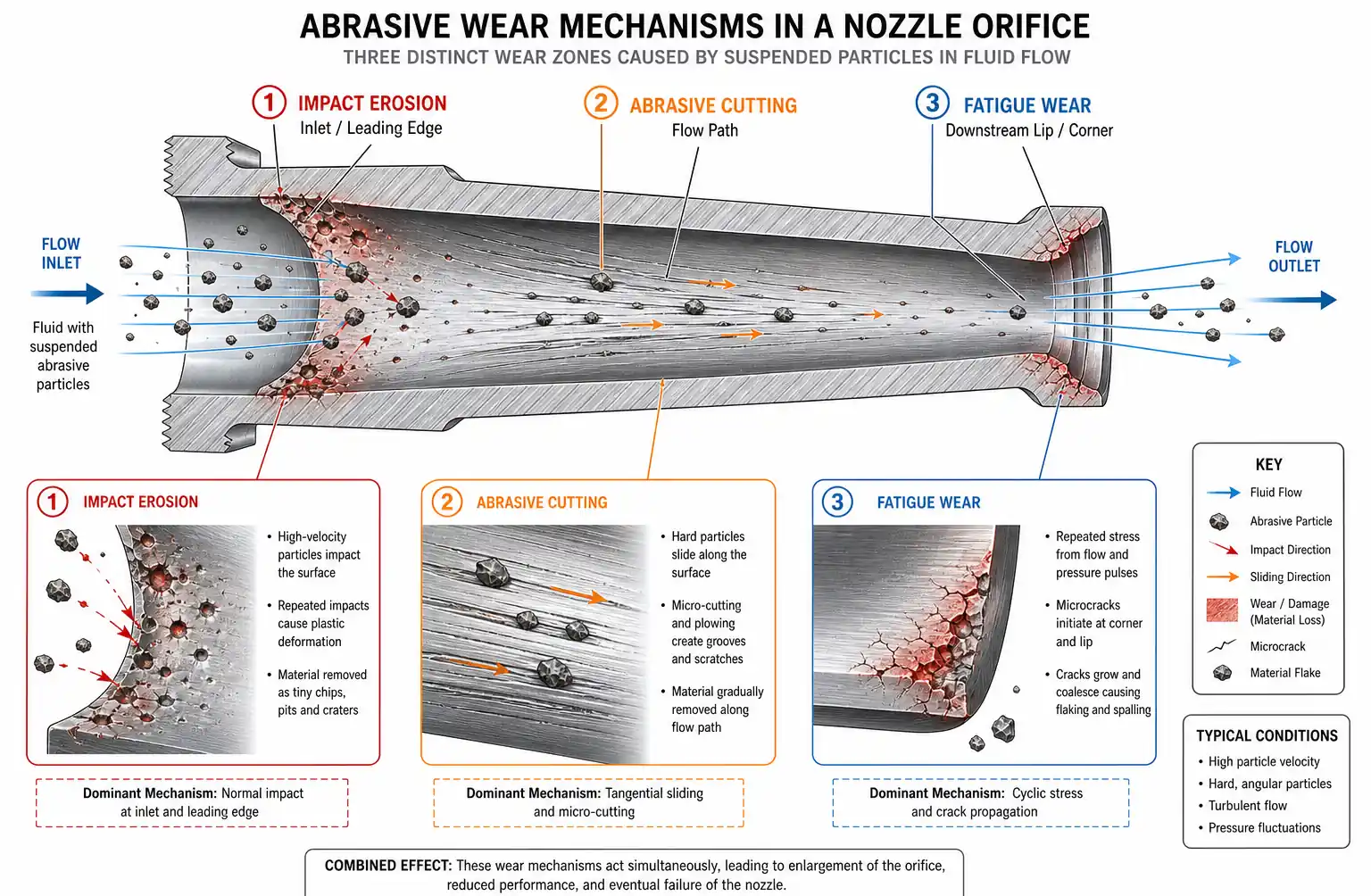
Nozzle wear in abrasive slurry applications isn't just about material hardness—it's a complex interplay of erosion mechanisms, particle dynamics, and material properties.

nozzle-wear-mechanism-diagram

What Causes Nozzle Wear?

When abrasive particles travel through a nozzle at high velocity, they create microscopic impacts that gradually erode the nozzle's internal surface. This erosion follows predictable patterns:

Primary wear mechanisms include:

  • Impact erosion from particle collisions
  • Abrasive cutting from sharp particle edges
  • Fatigue wear from repeated stress cycles
  • Corrosion-enhanced erosion in chemical environments

The wear rate accelerates exponentially as the nozzle orifice enlarges. A 10% increase in orifice diameter can result in a 20-30% increase in flow rate, dramatically affecting spray pattern consistency and material consumption.

Why Nozzle Material Matters

Different materials respond differently to abrasive wear. While hardness is important, factors like fracture toughness, grain structure, and chemical stability play equally critical roles in determining actual service life.

2. Material Properties: Silicon Carbide vs Ceramic

Understanding the fundamental differences between silicon carbide and ceramic materials helps explain their performance in abrasive environments.

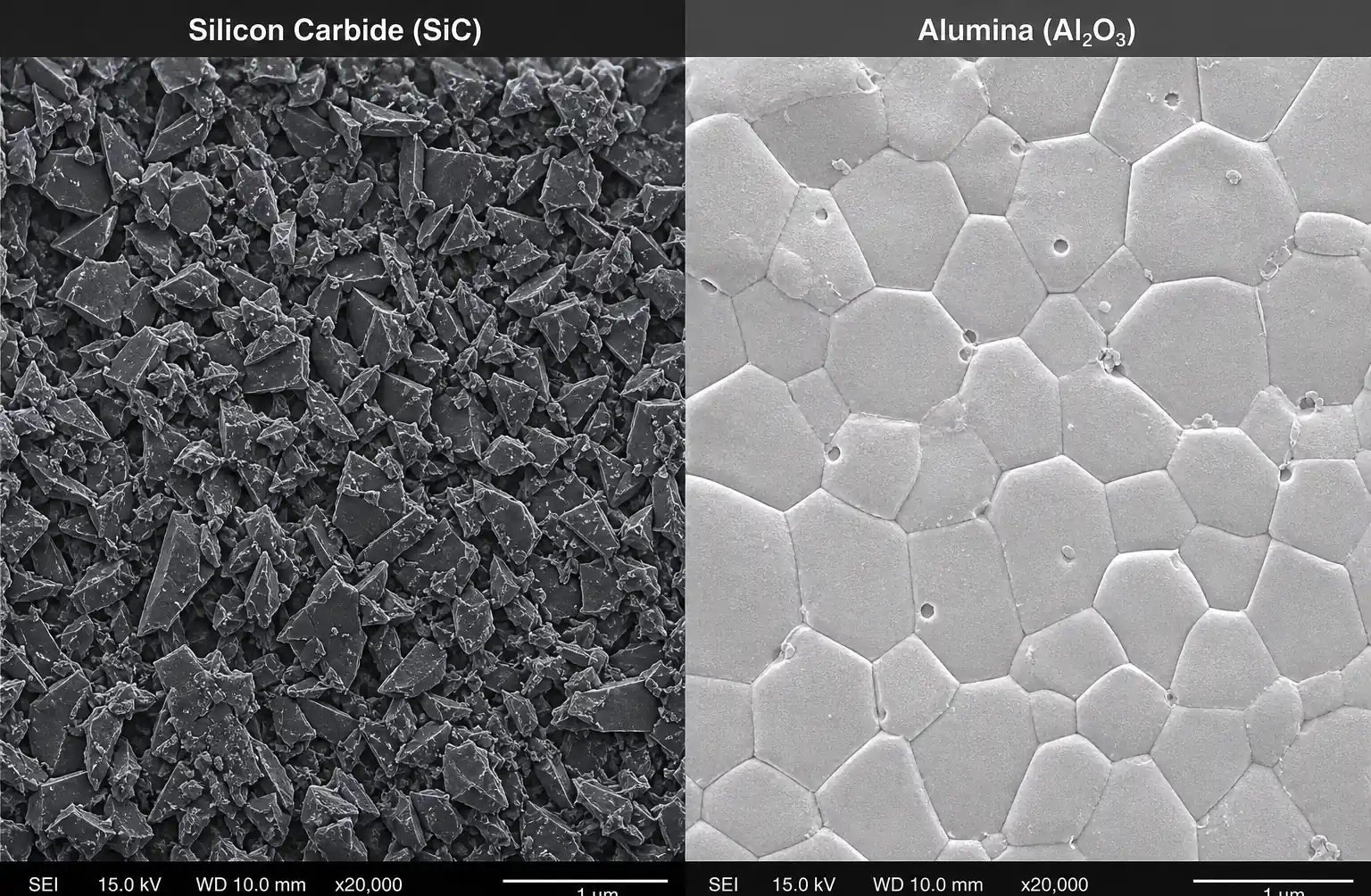
silicon-carbide-vs-ceramic-material-comparison

Silicon Carbide (SiC) Properties

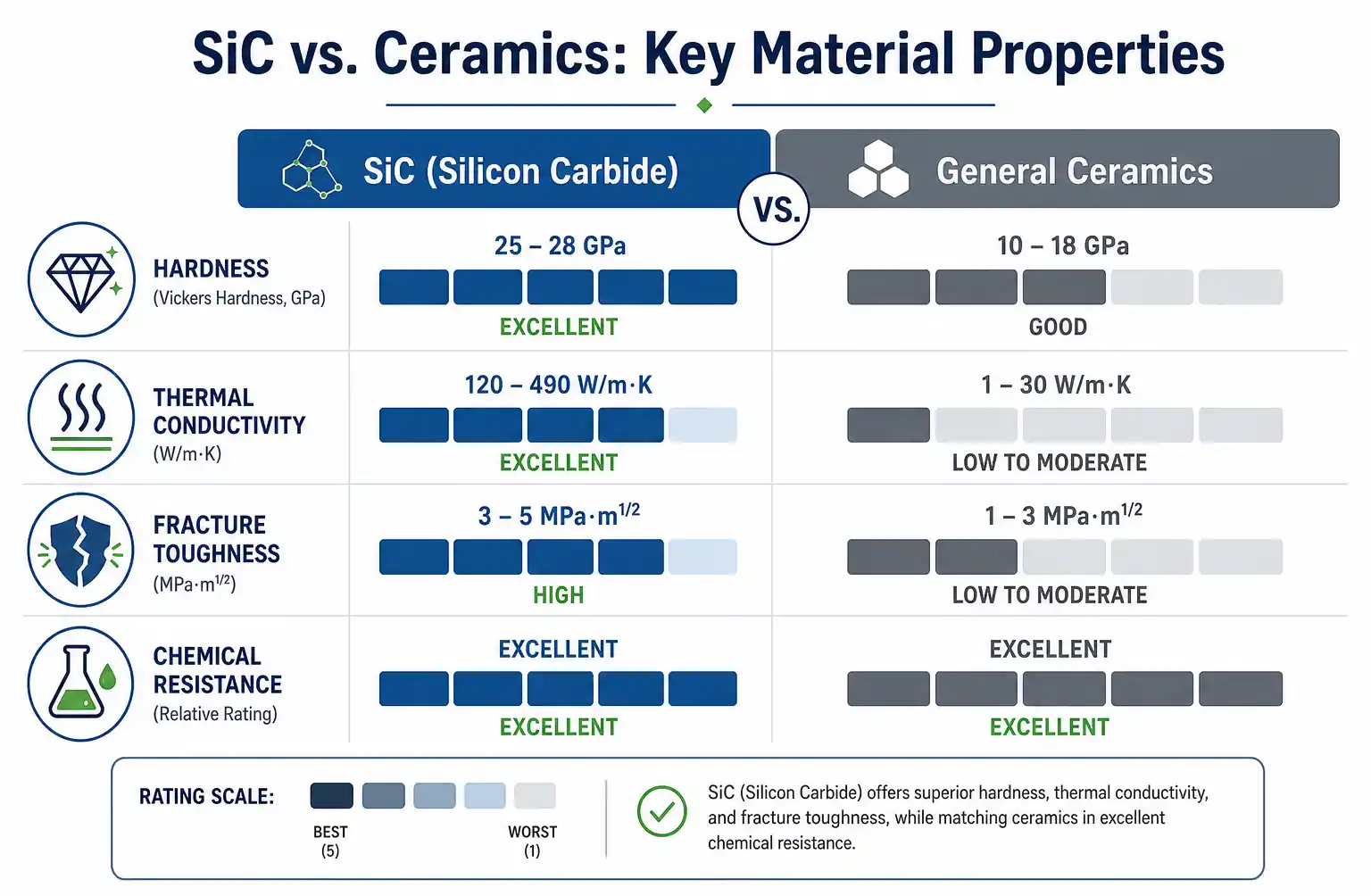
Silicon carbide is an engineered ceramic material known for exceptional hardness and thermal conductivity.

Key characteristics:

  • Hardness: 9-9.5 on Mohs scale (2500-3000 Knoop)
  • Density: 3.1-3.2 g/cm³
  • Fracture toughness: 3-5 MPa·m½
  • Thermal conductivity: 120-200 W/m·K
  • Chemical resistance: Excellent in most environments

Silicon carbide's covalent bonding structure creates a material that resists both mechanical wear and chemical attack. Its high thermal conductivity helps dissipate heat generated during high-velocity particle impacts.

Ceramic (Alumina-Based) Properties

Industrial ceramic nozzles typically use alumina (Al₂O₃) or alumina-based composites.

Key characteristics:

  • Hardness: 9 on Mohs scale (1800-2100 Knoop)
  • Density: 3.6-3.9 g/cm³
  • Fracture toughness: 3-4 MPa·m½
  • Thermal conductivity: 20-30 W/m·K
  • Chemical resistance: Good, but vulnerable to strong acids/bases

Alumina ceramics offer excellent hardness at a lower cost than silicon carbide, making them popular for moderate-duty applications.

material-properties-infographic

Material Comparison Table

Property Silicon Carbide Alumina Ceramic Advantage
Hardness Higher High SiC
Wear Resistance Superior Good SiC
Thermal Shock Resistance Excellent Moderate SiC
Chemical Resistance Excellent Good SiC
Cost Higher Lower Ceramic
Availability Good Excellent Ceramic

3. Wear Resistance Testing Methodologies

Standardized testing protocols provide objective data for comparing nozzle materials under controlled conditions.

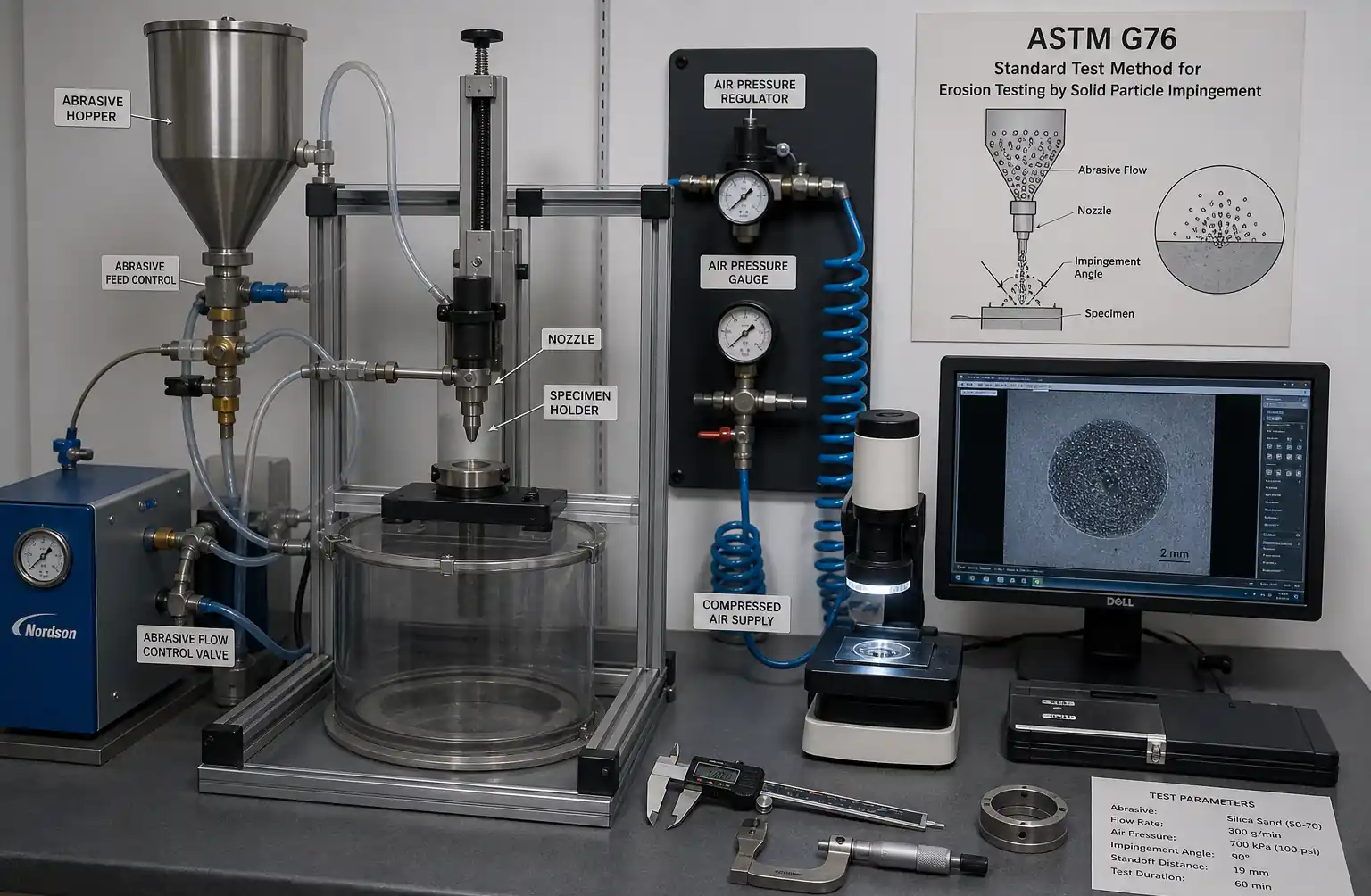
astm-g76-erosion-testing-setup

ASTM G76 Erosion Testing

The ASTM G76 standard is the most widely used method for evaluating erosion resistance of materials.

Test parameters:

  • Abrasive: Angular aluminum oxide particles (50 μm)
  • Velocity: 30-100 m/s
  • Impact angle: 30°, 60°, and 90°
  • Duration: Until measurable mass loss occurs
  • Temperature: Ambient or elevated

This test simulates real-world erosion conditions and provides quantitative data on material loss rates.

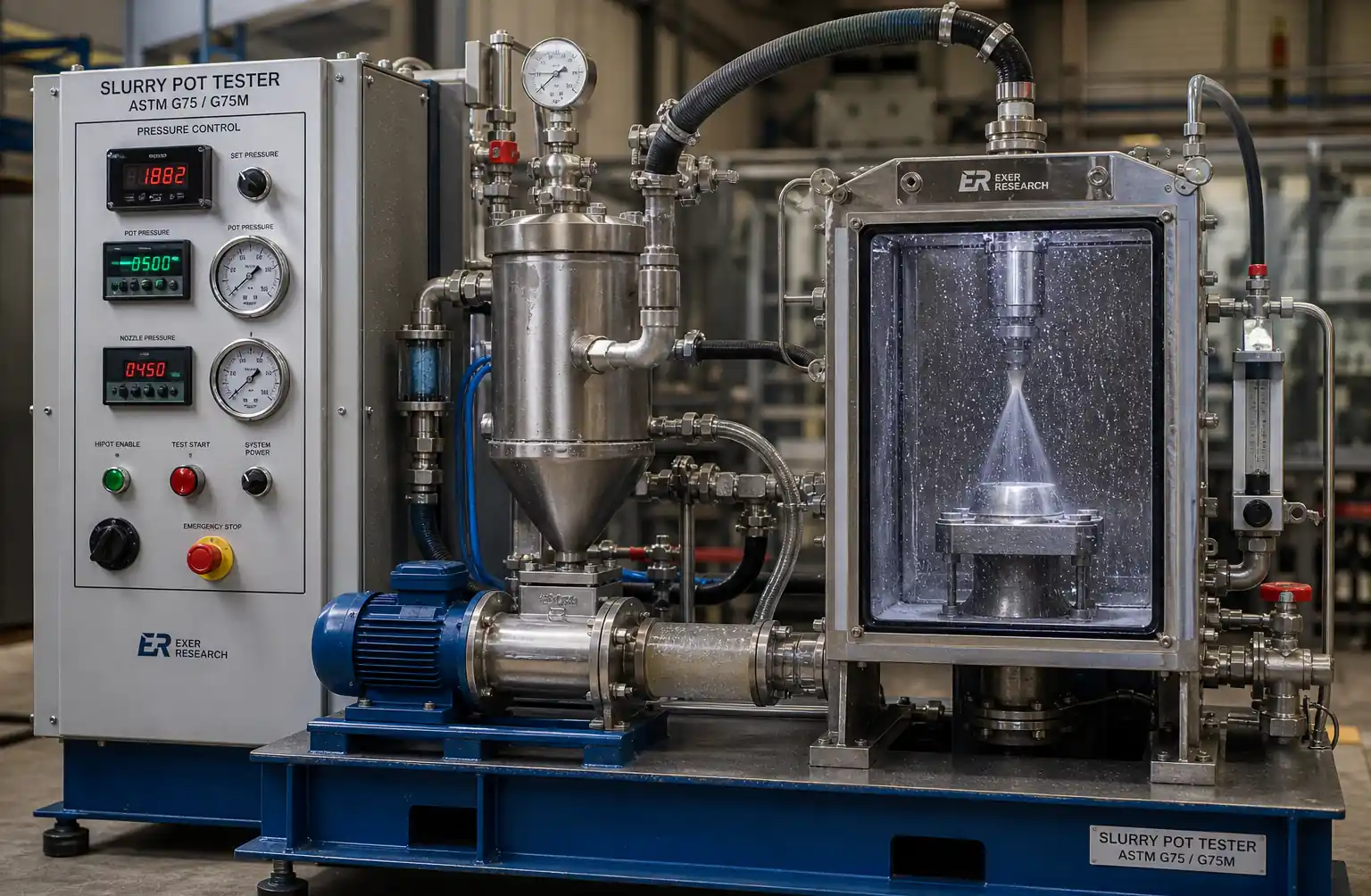
Slurry Pot Testing

For applications involving liquid-borne abrasives, slurry pot testing offers more relevant data.

Test setup:

  • Continuous circulation of abrasive slurry
  • Controlled particle concentration (typically 10-30% by weight)
  • Variable pressure (100-3000 psi)
  • Temperature control
  • Periodic measurement of orifice diameter

This method closely mimics industrial spraying conditions and provides realistic wear rate data.

slurry-pot-testing-apparatus

Accelerated Wear Testing

To reduce testing time, accelerated protocols use higher abrasive concentrations or velocities while maintaining similar wear mechanisms.

Acceleration factors:

  • 2-5x normal abrasive concentration
  • Elevated operating pressures
  • Extended continuous operation
  • Correlation factors applied to predict real-world life

Proper validation ensures accelerated results accurately predict field performance.

4. Comparative Lifespan Analysis

Real-world testing data reveals significant differences in wear resistance between silicon carbide and ceramic nozzles.

Laboratory Test Results

Independent testing under controlled conditions provides baseline performance data.

ASTM G76 erosion rates (mg material loss per kg abrasive):

  • Silicon Carbide: 8-12 mg/kg
  • Alumina Ceramic: 18-25 mg/kg
  • SiC advantage: 2-3x better wear resistance

These results translate to significantly longer service life in abrasive applications.

Field Performance Data

Industrial applications provide real-world validation of laboratory findings.

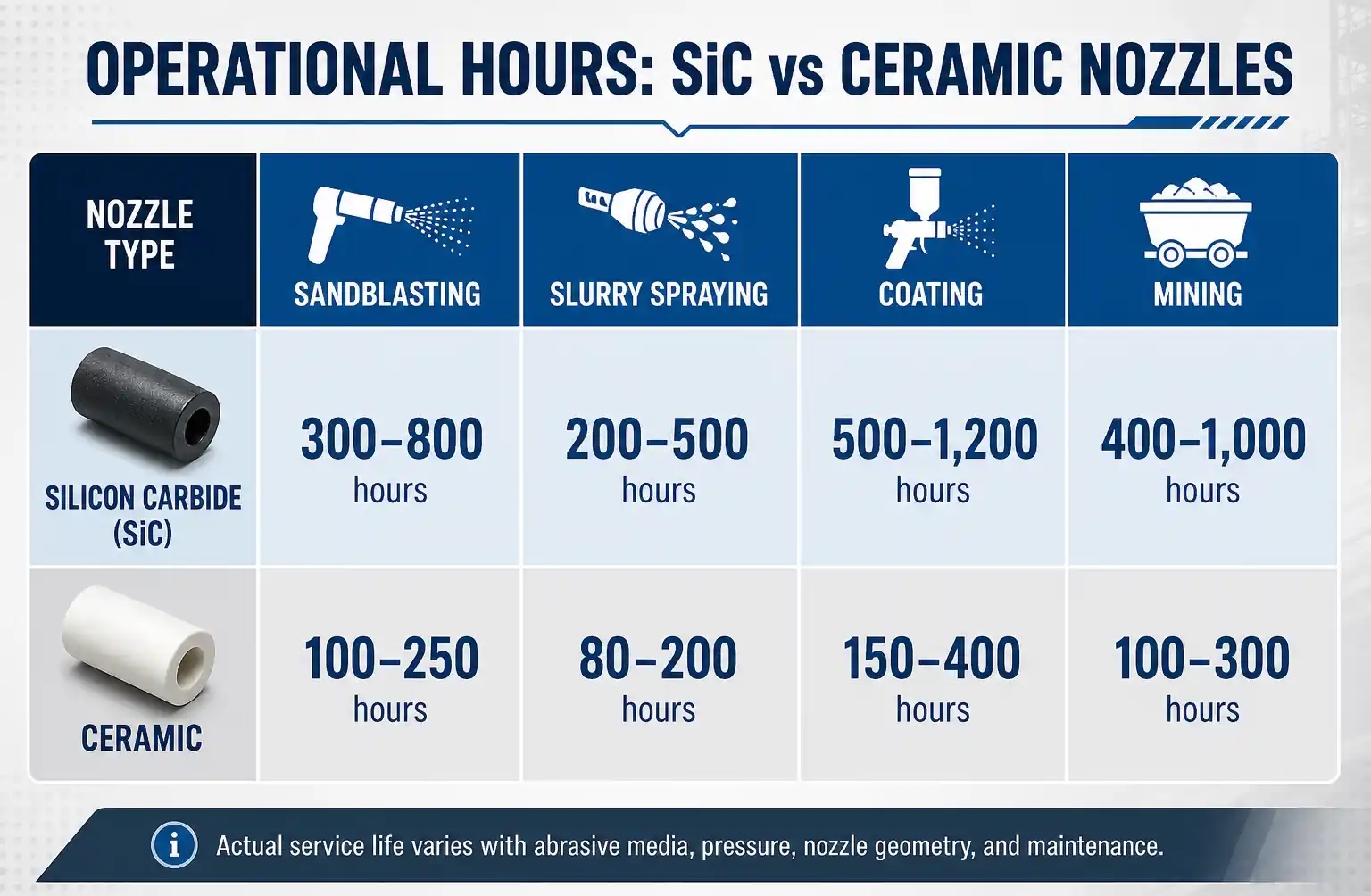
Typical service life in abrasive slurry spraying (hours of operation):

Application Silicon Carbide Alumina Ceramic Lifespan Ratio
Sandblasting (aluminum oxide) 800-1200 hrs 300-500 hrs 2.5:1
Slurry spraying (silica) 1500-2000 hrs 600-900 hrs 2.5:1
Coating application (ceramic particles) 1000-1500 hrs 400-700 hrs 2.3:1
Mining slurry (mixed minerals) 600-900 hrs 250-400 hrs 2.5:1

Across diverse applications, silicon carbide consistently delivers 2-3x longer service life than alumina ceramic.

field-performance-comparison-chart

Wear Pattern Analysis

The way nozzles wear affects performance differently depending on material.

Silicon carbide wear characteristics:

  • Uniform erosion across orifice
  • Gradual diameter increase
  • Maintained spray pattern quality
  • Predictable performance degradation

Ceramic wear characteristics:

  • More localized erosion
  • Potential for chipping at orifice edges
  • Faster spray pattern deterioration
  • Less predictable failure modes

Silicon carbide's superior fracture toughness prevents the microchipping that accelerates ceramic nozzle wear.

5. Cost-Benefit Analysis Over Nozzle Lifetime

While silicon carbide nozzles cost more upfront, total cost of ownership tells a different story.

initial-cost-comparison-visual

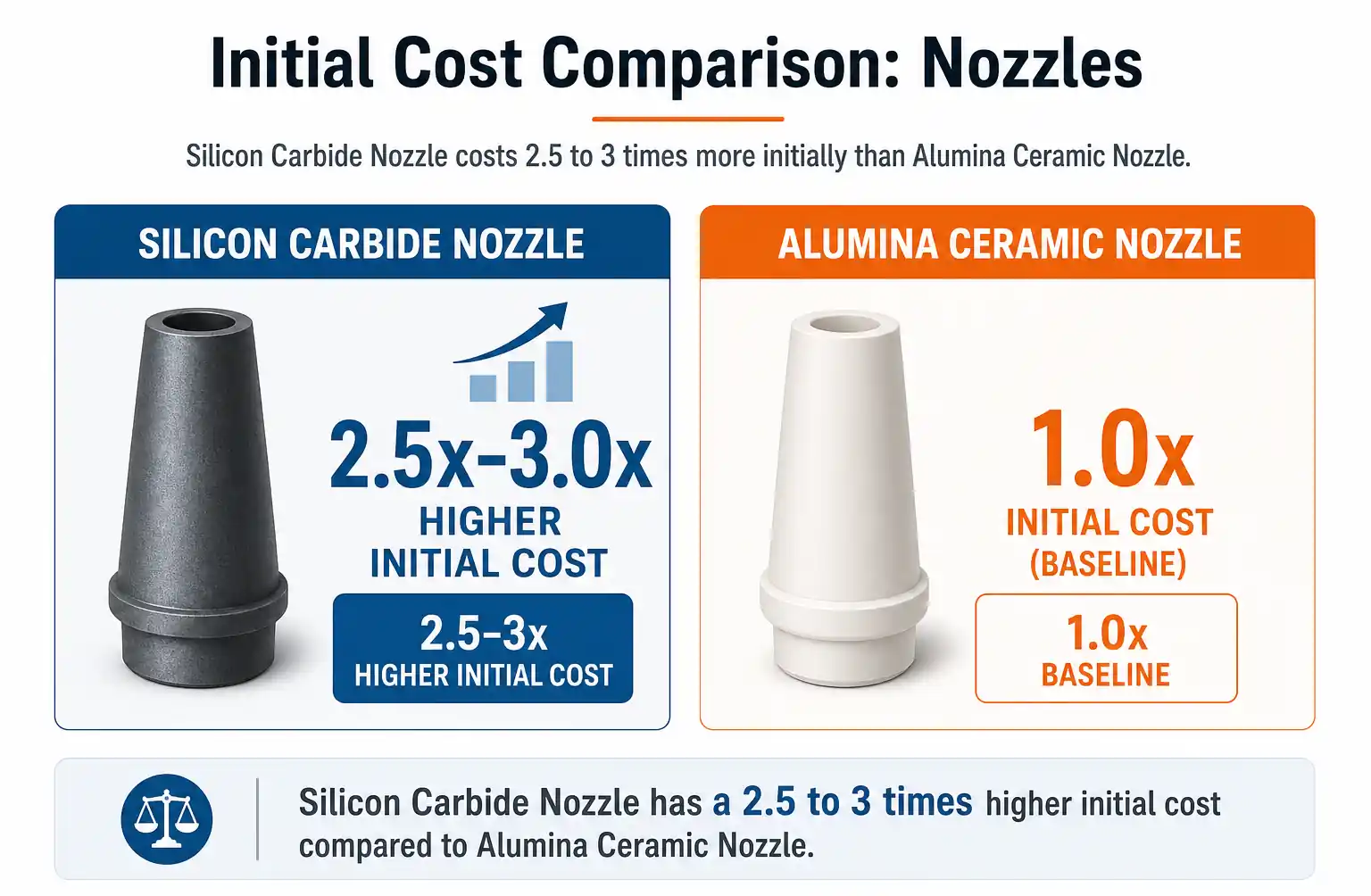
Initial Investment Comparison

Typical pricing (varies by size and supplier):

  • Silicon Carbide nozzle: $80-$200
  • Alumina Ceramic nozzle: $30-$80
  • Initial cost ratio: 2.5-3:1

The higher initial cost of silicon carbide often creates sticker shock, but this represents only part of the economic equation.

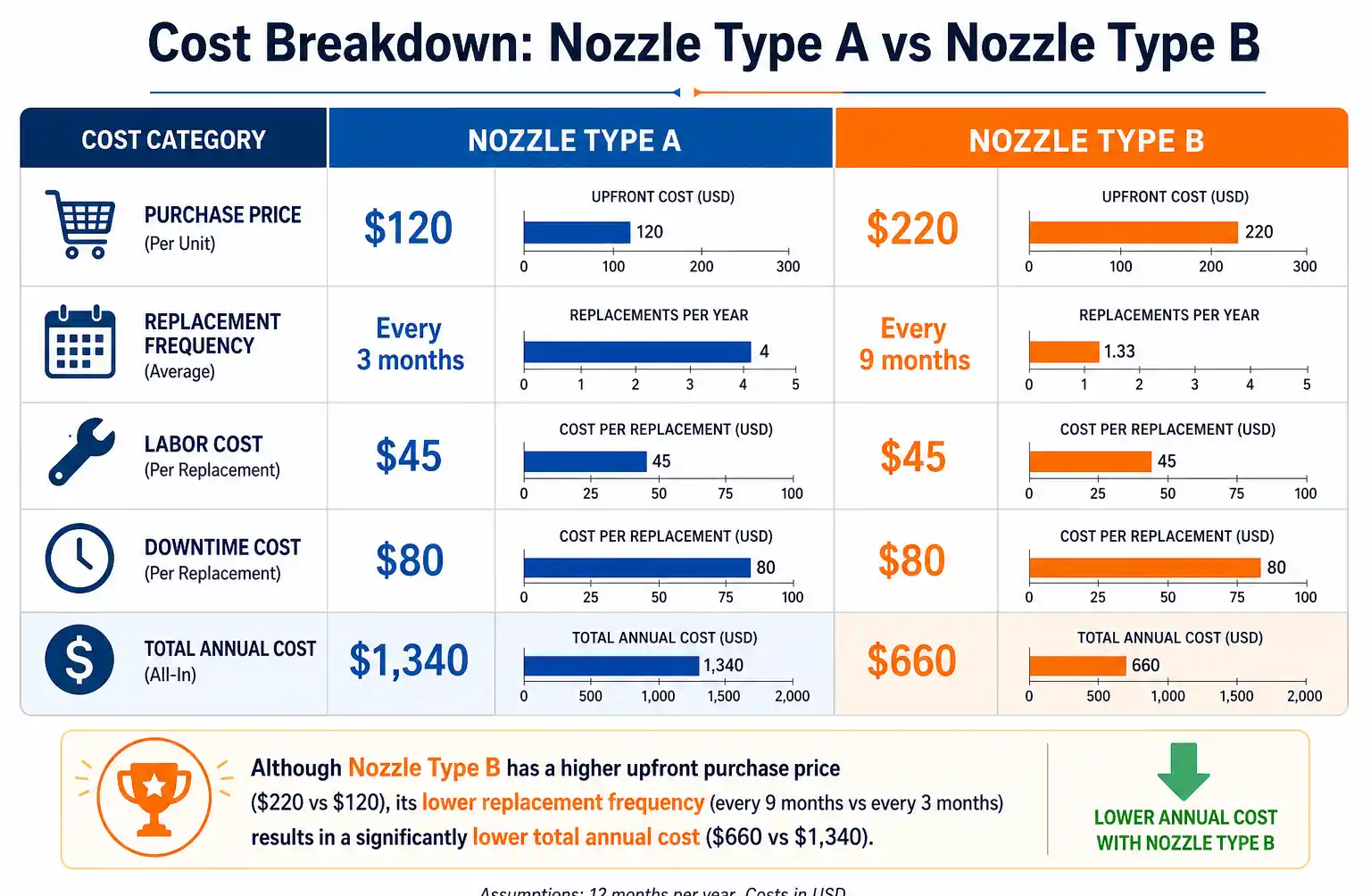
Total Cost of Ownership (TCO)

A comprehensive TCO analysis includes all costs over the nozzle's service life.

Cost factors:

  • Initial purchase price
  • Replacement frequency
  • Labor for changeovers
  • Production downtime
  • Material waste from inconsistent spray patterns
  • Quality issues from worn nozzles

Example calculation (1000-hour operating period):

Silicon Carbide:

  • Nozzle cost: $150
  • Replacements needed: 1
  • Changeover labor: $50 × 1 = $50
  • Downtime cost: $200 × 1 = $200
  • Total: $400

Alumina Ceramic:

  • Nozzle cost: $50
  • Replacements needed: 3
  • Changeover labor: $50 × 3 = $150
  • Downtime cost: $200 × 3 = $600
  • Total: $950

TCO advantage: Silicon carbide saves 58% over the operating period

total-cost-ownership-breakdown

Hidden Costs of Frequent Replacement

Beyond direct costs, frequent nozzle changes create operational challenges:

  • Production scheduling disruptions
  • Increased inventory management complexity
  • Higher risk of installation errors
  • More frequent quality control checks
  • Greater environmental waste

These factors often tip the economic balance strongly toward longer-lasting silicon carbide nozzles.

6. Application-Specific Recommendations

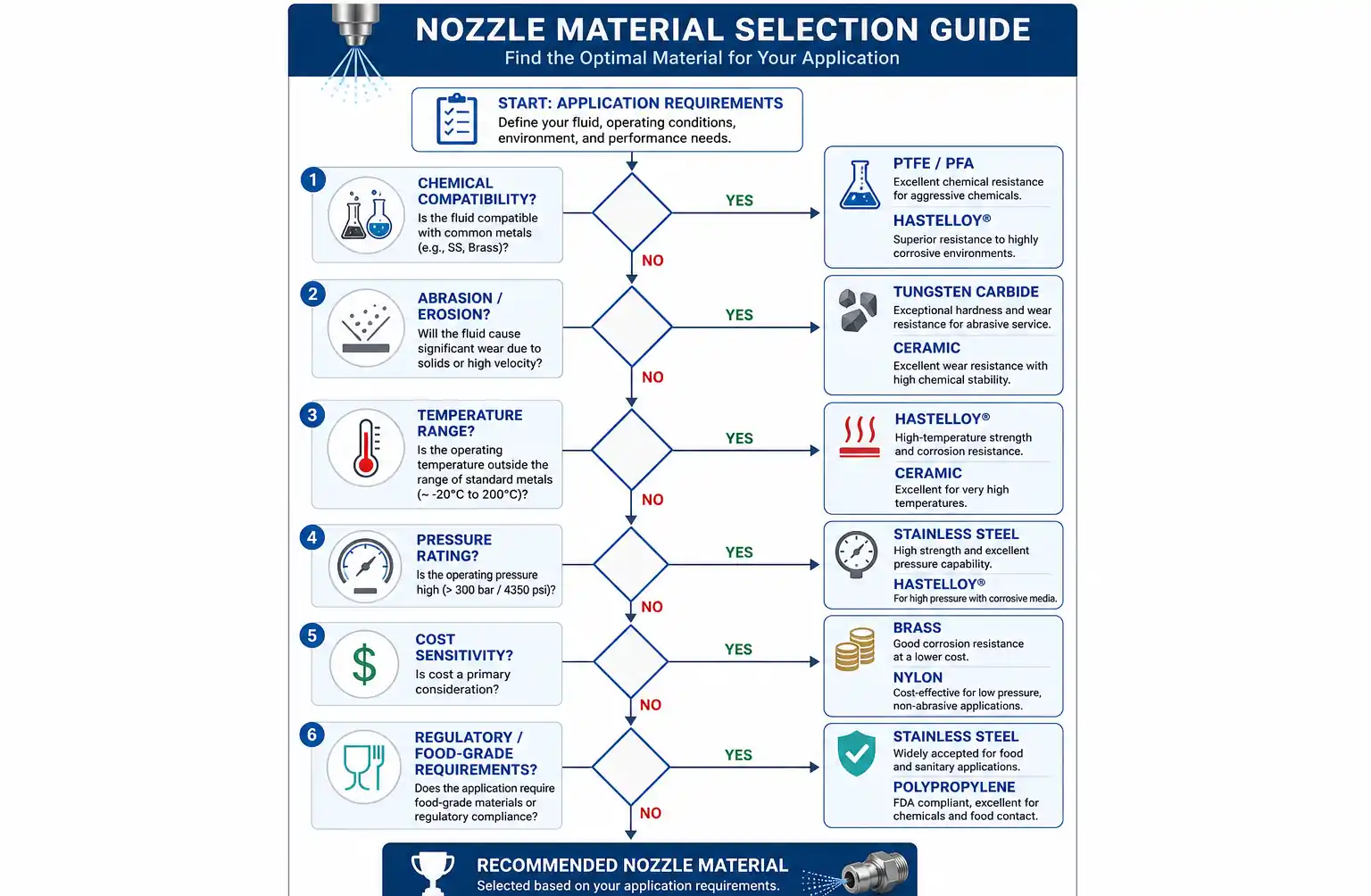
The optimal nozzle material depends on your specific operating conditions and priorities.

application-selection-flowchart

When Silicon Carbide is the Clear Choice

High-abrasion applications:

  • Sandblasting with hard abrasives (aluminum oxide, silicon carbide)
  • Mining slurry handling with high mineral content
  • Industrial coating with ceramic particles
  • Any application where nozzle life exceeds 500 hours

High-value production:

  • Precision coating operations
  • Pharmaceutical or food-grade spraying
  • Applications where downtime costs exceed $100/hour
  • Quality-critical processes requiring consistent spray patterns

Harsh chemical environments:

  • Acidic or alkaline slurries
  • High-temperature applications (>200°C)
  • Corrosive chemical spraying

When Ceramic Nozzles Make Sense

Low-abrasion applications:

  • Water spraying with minimal particulates
  • Soft material slurries (organic materials, polymers)
  • Intermittent use with long idle periods
  • Applications where nozzle life under 300 hours is acceptable

Budget-constrained operations:

  • Startup operations with limited capital
  • Temporary or experimental setups
  • Low-volume production
  • Applications where downtime costs are minimal

Readily available replacement needs:

  • Remote locations where SiC availability is limited
  • Operations requiring large nozzle inventories
  • Standardized systems designed around ceramic nozzles

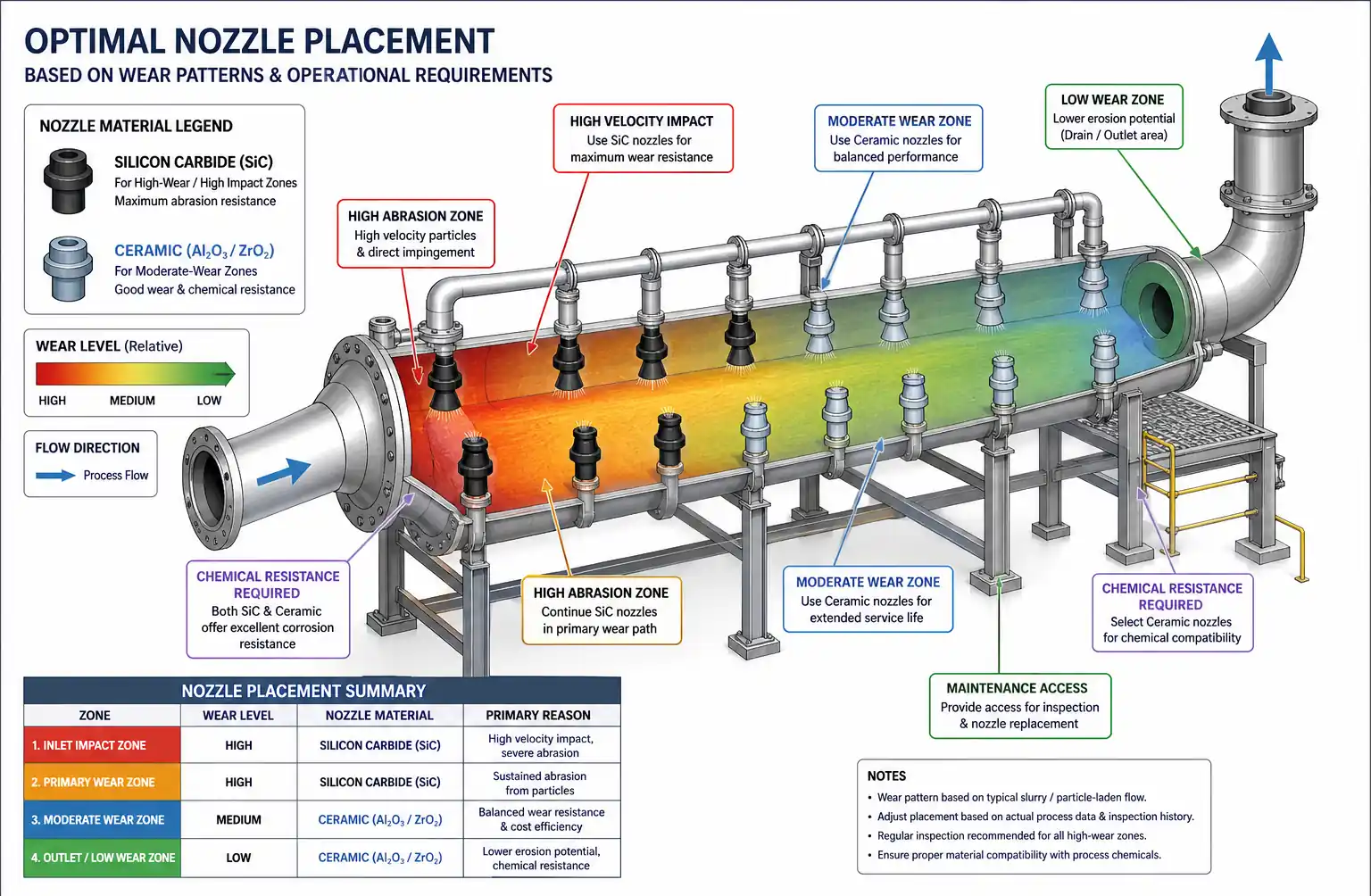
hybrid-nozzle-deployment-strategy

Hybrid Approaches

Some operations benefit from strategic material selection:

  • Use silicon carbide for primary high-wear positions
  • Deploy ceramic nozzles in lower-wear secondary positions
  • Maintain ceramic backup inventory for emergency replacements
  • Transition to silicon carbide as production volumes increase

7. Maintenance and Performance Optimization

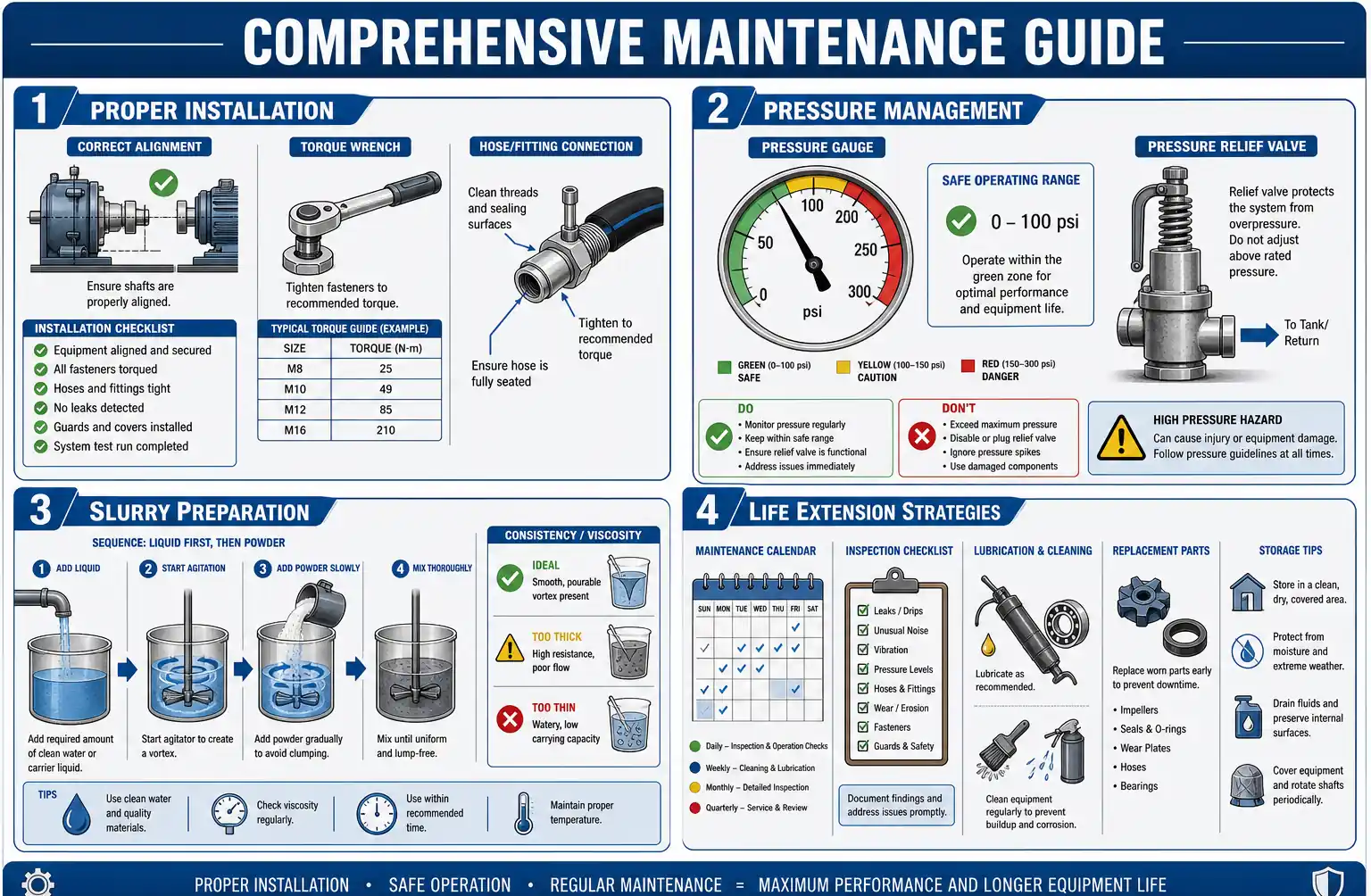
Proper maintenance extends nozzle life regardless of material choice.

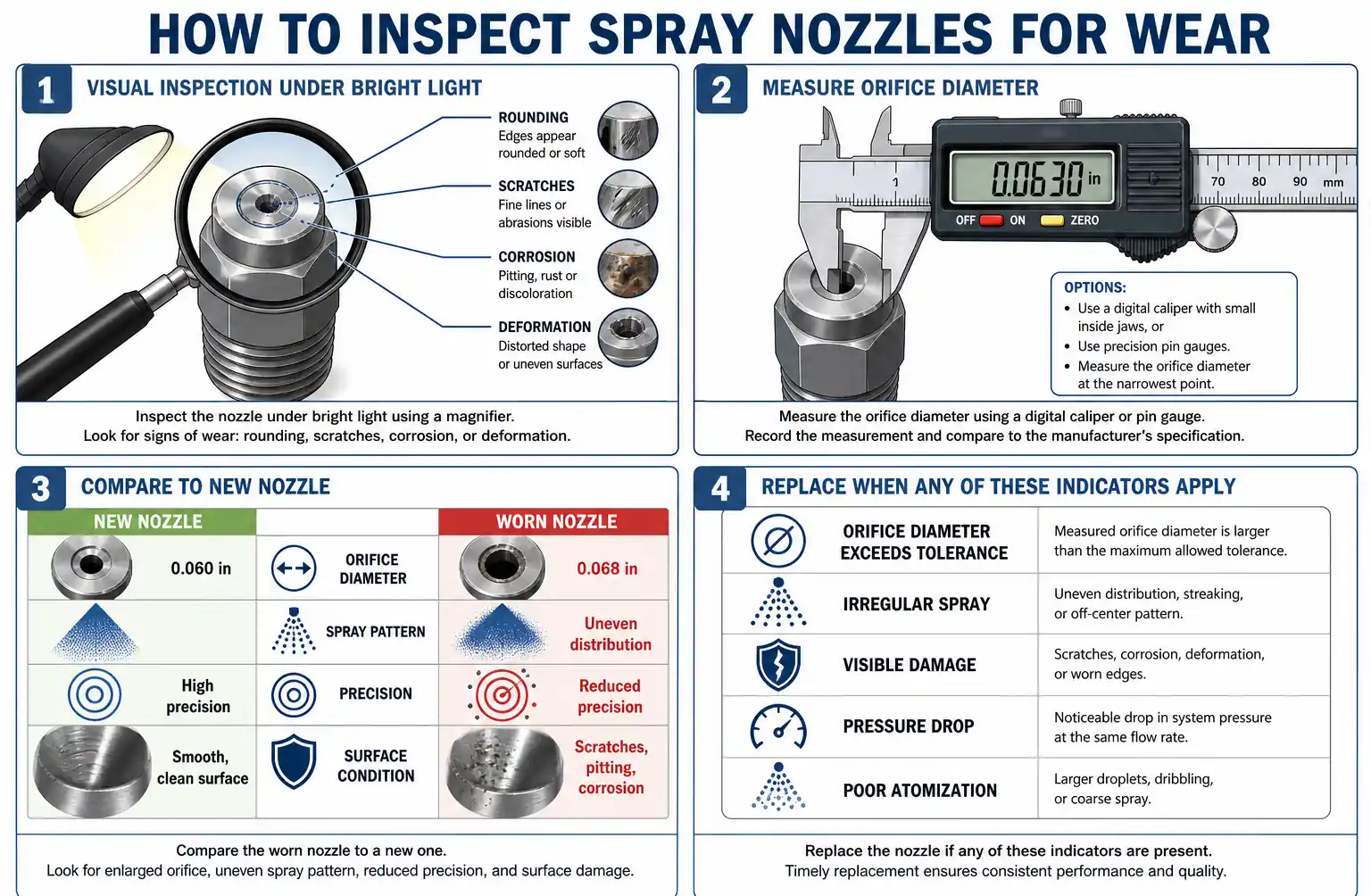
nozzle-wear-inspection-guide

Monitoring Nozzle Wear

Implement systematic monitoring to catch wear before it impacts quality:

Inspection schedule:

  • Visual inspection: Every 50-100 operating hours
  • Orifice measurement: Every 100-200 hours
  • Spray pattern testing: Every 200-300 hours
  • Flow rate verification: Monthly

Wear indicators:

  • Orifice diameter increase >5%
  • Visible surface roughness or pitting
  • Spray pattern distortion
  • Flow rate increase >10%
  • Pressure drop changes

Replace nozzles before wear significantly impacts performance.

Operating Best Practices

Optimize operating parameters to maximize nozzle life:

Pressure management:

  • Operate at minimum effective pressure
  • Avoid pressure spikes and surges
  • Use pressure regulators for consistent operation

Slurry preparation:

  • Filter out oversized particles
  • Maintain consistent particle concentration
  • Control slurry temperature
  • Prevent particle settling in feed lines

Installation considerations:

  • Ensure proper nozzle alignment
  • Use appropriate mounting hardware
  • Avoid overtightening that creates stress points
  • Protect nozzles from mechanical damage

nozzle-maintenance-best-practices

Extending Service Life

Additional strategies can significantly extend nozzle longevity:

  • Rotate nozzles between high and low-wear positions
  • Implement automated cleaning cycles
  • Use upstream filtration to remove oversized particles
  • Optimize spray angle to reduce impact velocity
  • Consider pulsed operation to reduce continuous wear

8. Future Trends in Nozzle Materials

Material science advances continue to push the boundaries of wear resistance.

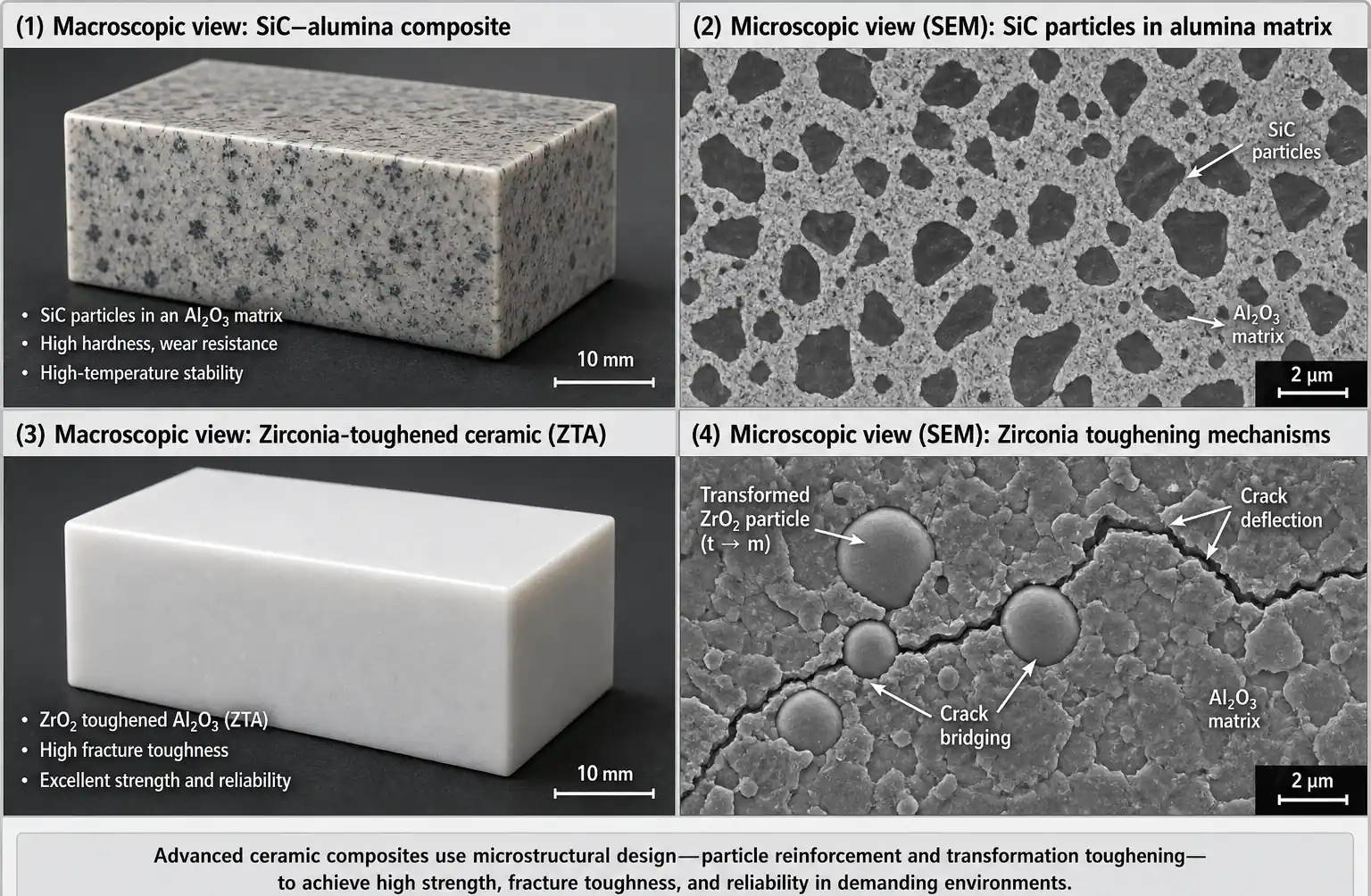
advanced-ceramic-composites

Advanced Ceramic Composites

Next-generation materials combine the best properties of multiple ceramics:

Silicon carbide-alumina composites:

  • Enhanced fracture toughness
  • Improved thermal shock resistance
  • Cost positioned between pure SiC and alumina

Zirconia-toughened ceramics:

  • Superior impact resistance
  • Better performance in thermal cycling
  • Emerging availability for nozzle applications

Coating Technologies

Surface treatments enhance base material performance:

Diamond-like carbon (DLC) coatings:

  • Ultra-low friction reduces particle adhesion
  • Enhanced chemical resistance
  • Extends life of both SiC and ceramic substrates

Nanostructured coatings:

  • Engineered surface properties
  • Self-healing capabilities under development
  • Potential for 5-10x life extension

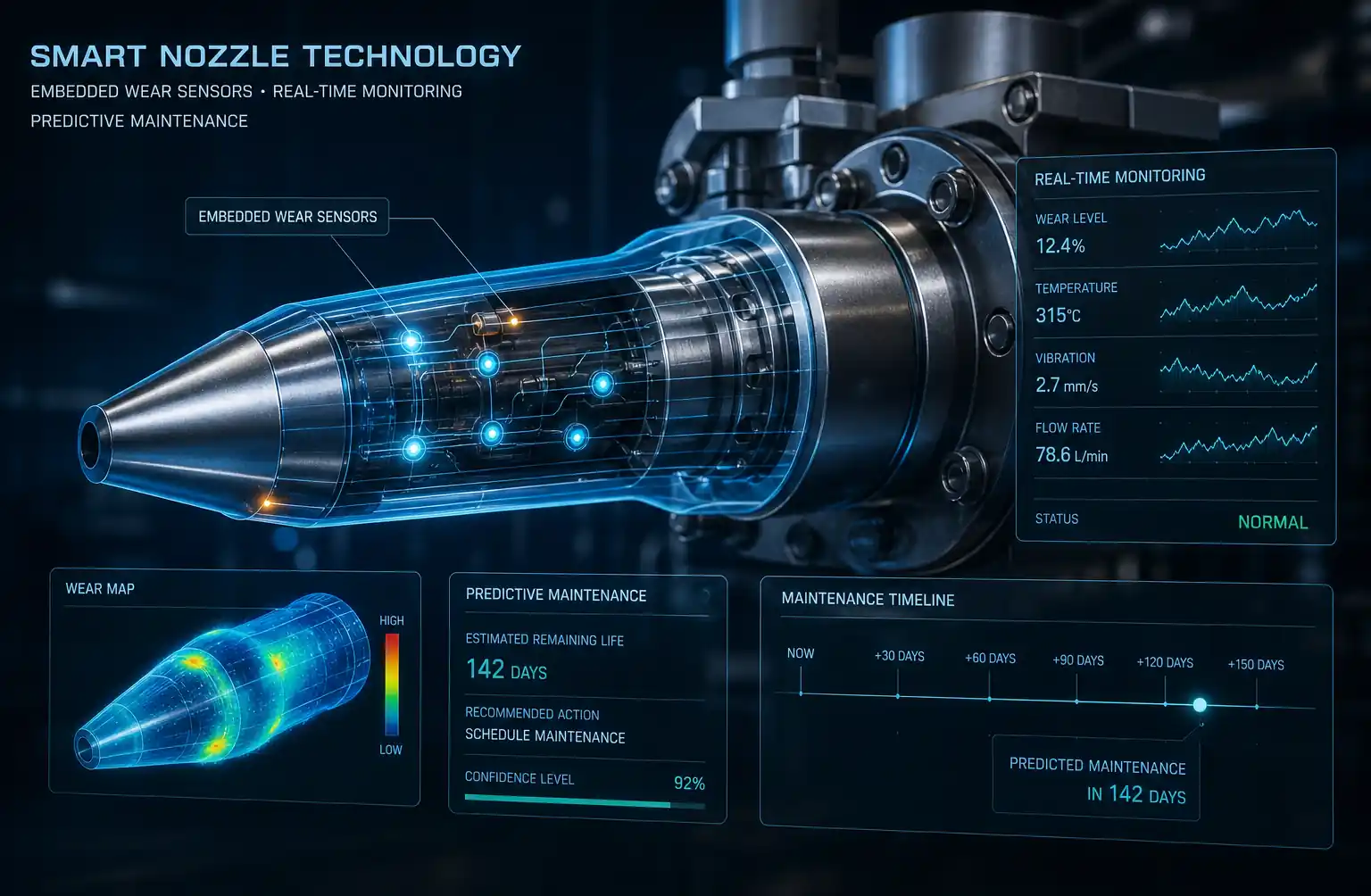
smart-nozzle-technology-concept

Smart Nozzle Technology

Integration of sensors and monitoring systems:

  • Embedded wear sensors for real-time monitoring
  • Predictive maintenance algorithms
  • Automated replacement scheduling
  • Performance optimization through data analytics

These technologies will transform nozzle management from reactive to predictive maintenance.

Conclusion

The wear resistance testing data clearly demonstrates silicon carbide's superior performance in abrasive slurry applications. With 2-3x longer service life, better wear patterns, and lower total cost of ownership, silicon carbide nozzles represent the optimal choice for most high-abrasion industrial applications.

While ceramic nozzles maintain relevance in low-abrasion, budget-sensitive applications, the economic and operational advantages of silicon carbide become overwhelming in demanding environments. As material costs continue to decline and advanced composites emerge, the performance gap will likely widen further.