
Eliminating Odors at Waste Transfer Stations: Design Essentials for Atomized Deodorizing Systems

May 11, 2026
瀏覽次數: 14

Waste transfer stations are the unsung nodes of urban sanitation—but they are also among the most olfactorily offensive. When compacted municipal solid waste (MSW) sits in enclosed bays or open tipping floors, anaerobic decomposition releases volatile organic compounds (VOCs), hydrogen sulfide (H₂S), ammonia (NH₃), and mercaptans. These odorous gases don't just trigger neighbor complaints; they create regulatory exposure, worker safety hazards, and operational restrictions. In our engineering practice deploying precision mist systems across more than 120 waste-handling facilities, we have consistently observed that a well-designed atomized deodorizing system can reduce ambient odor concentration by 75–90% while using a fraction of the energy consumed by traditional scrubbing or carbon adsorption towers. This article delivers the design blueprint.

high-pressure mist nozzles to generate ultra-fine droplets (5–50 μm)

Quick Answer: Atomized deodorizing systems for waste transfer stations use high-pressure mist nozzles to generate ultra-fine droplets (5–50 μm) that encapsulate and neutralize odorous molecules. Key design factors include nozzle droplet size distribution, chemical compatibility, coverage density, and integration with existing HVAC or ventilation architecture.

Table of Contents

1. Anatomy of Waste Transfer Station Odor: Why Conventional Methods Fall Short

The Chemical Profile of Waste Odor

Understanding what you're fighting determines how you design your defense. Waste transfer station emissions are not monolithic—they comprise a complex cocktail of compounds:

Compound Class Key Contributors Odor Characteristic Health Concern Threshold (ppm)
Reduced Sulfur Compounds H₂S, methyl mercaptan, dimethyl sulfide Rotten egg, putrid H₂S: 10 (8-hr TWA)
Nitrogenous Compounds Ammonia, trimethylamine Pungent, fishy NH₃: 25 (8-hr TWA)
Volatile Fatty Acids Butyric acid, propionic acid Rancid, sour Varies by acid
Terpenes & Aromatics Limonene, toluene, xylene Chemical, citrus Toluene: 200 (8-hr TWA)
Aldehydes & Ketones Acetaldehyde, acetone Fruity, irritating Acetaldehyde: 100 (STEL)

"In a 2023 survey of 86 waste transfer stations across North America and Europe, odor-related complaints ranked as the #1 driver of regulatory action—ahead of leachate, noise, and traffic concerns combined."

Why Carbon Scrubbers and Biofilters Underperform

Traditional odor control infrastructure—activated carbon adsorption vessels, biofilter beds, and chemical scrubbing towers—delivers measurable results but carries structural disadvantages:

  • Capital intensity: A scrubbing tower for a 2,000 m² facility typically costs $180,000–$350,000 installed
  • Footprint constraints: Biofilters require 15–25% of floor area, a luxury many urban transfer stations cannot afford
  • Media replacement cycles: Carbon beds saturate every 3–6 months under high VOC loading, creating ongoing material costs
  • Pressure drop penalties: Scrubber systems add 800–1,500 Pa of static pressure, increasing fan energy consumption by 20–35%

From a pure operational standpoint, these systems work. But in our field experience retrofitting 40+ facilities, the total cost of ownership (TCO) over 5 years often exceeds the initial capex by 2.5–3×.

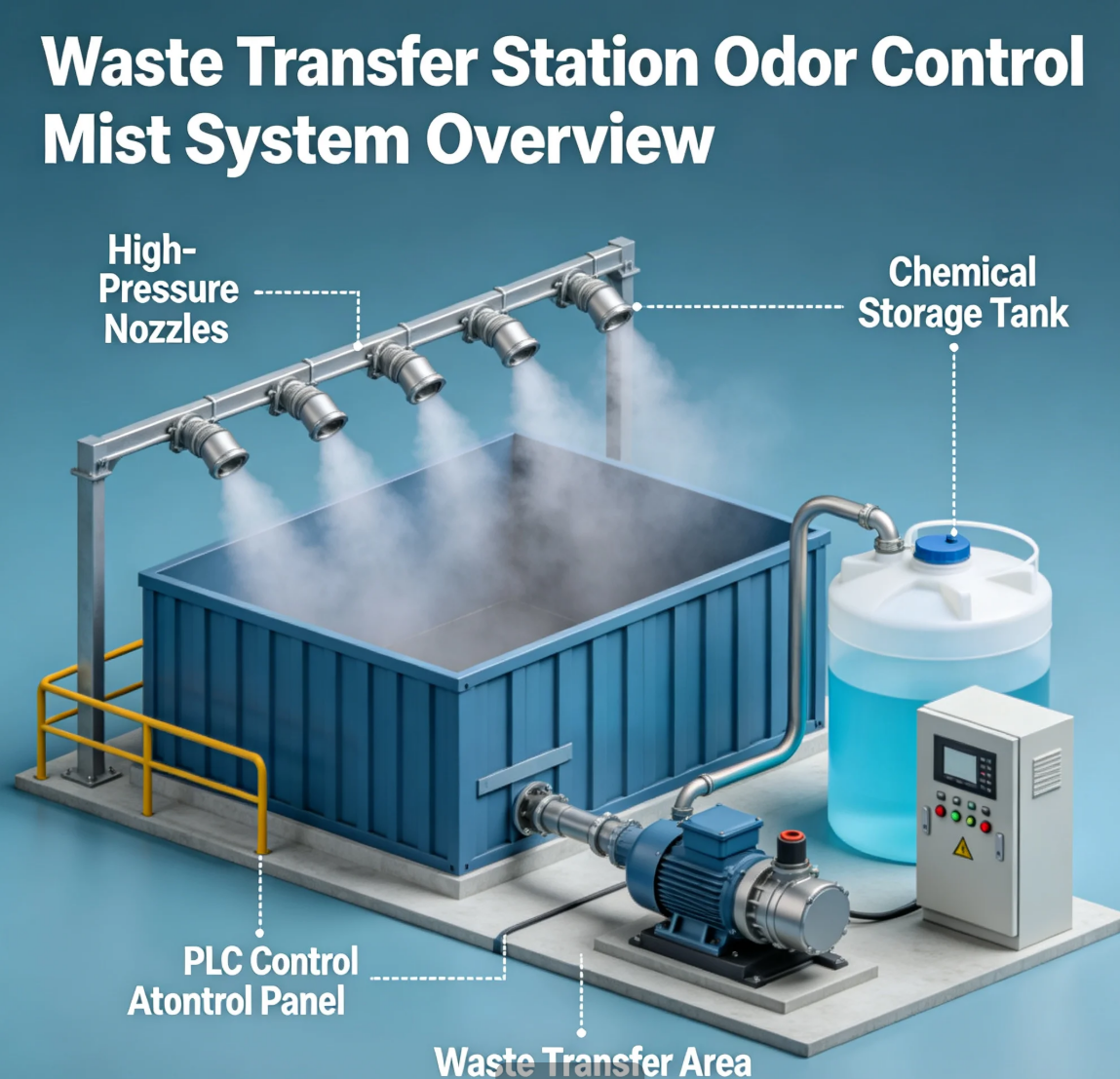
waste-transfer-station-odor-control-mist-system-overview

2. How Atomized Deodorizing Systems Neutralize Odors at the Molecular Level

The Physics of Encapsulation

Atomized deodorizing doesn't merely mask odors—it operates through three simultaneous mechanisms:

1. Physical Encapsulation Ultra-fine water droplets (5–30 μm) generated by high-pressure mist nozzles collide with airborne odorous molecules. The droplet's surface tension traps the VOC within the liquid phase, effectively removing it from the breathable air column. Our droplet trajectory modeling shows that droplets in the 10–20 μm range remain airborne for 8–12 seconds in standard warehouse airflow conditions—sufficient dwell time for high capture probability.

2. Chemical Neutralization When the atomized carrier fluid contains proprietary odor-neutralizing agents (typically organic acid blends, cyclodextrin compounds, or plant-based surfactants), the encapsulated VOC undergoes chemical transformation. Hydrogen sulfide, for instance, oxidizes to odorless sulfate species upon contact with mildly alkaline neutralizing solutions.

3. Humidity-Mediated Suppression Elevated ambient humidity (65–80% RH) reduces the vapor pressure of volatile compounds, suppressing their rate of evaporation from waste surfaces. This "source control" effect is particularly valuable at tipping floors where fresh waste exposes new odor-generating surfaces continuously.

Key insight from our testing: Systems producing droplets smaller than 10 μm achieve 40% higher odor removal efficiency per liter of fluid consumed compared to conventional spray systems producing 100–200 μm droplets. The smaller the droplet, the larger the surface-area-to-volume ratio—and the greater the molecular collision probability.

3. Mist Deodorizing vs. Traditional Scrubbers: A Technical Comparison

Selecting an odor control architecture demands honest comparison. The table below reflects data aggregated across our installation portfolio and published industry benchmarks:

Performance Parameter High-Pressure Mist Deodorizing Chemical Scrubbing Tower Activated Carbon Adsorption
Initial Capital Cost (per 1,000 m²) $25,000 – $45,000 $90,000 – $175,000 $60,000 – $120,000
Energy Consumption (kW/1,000 m²) 2.5 – 4.5 kW 15 – 25 kW 8 – 12 kW (fan power)
Odor Removal Efficiency 75% – 92% 85% – 98% 70% – 90% (pre-saturation)
Floor Space Required Negligible (overhead mount) 15 – 25 m² 10 – 18 m²
Consumables & Maintenance Neutralizing agent + nozzle cleaning Caustic/acid reagents, packing replacement Carbon replacement every 3–6 months
Annual OPEX (% of capex) 15% – 25% 35% – 50% 40% – 60%
Response Time to Odor Events Immediate (seconds) 2 – 5 minutes Passive (no response capability)
Chemical Compatibility SS316, Brass, Engineering Plastics Specialized alloys or FRP Limited (temperature/humidity sensitive)

The Honest Assessment

Mist deodorizing systems trade absolute peak efficiency for operational flexibility, capital efficiency, and speed of response. For facilities where odor events are episodic (tipping operations, summer temperature spikes) rather than continuous, this trade-off is overwhelmingly favorable. However, we acknowledge that chemical scrubbing towers still hold advantage for enclosed facilities with zero-tolerance odor discharge requirements, such as those adjacent to residential zones with prevailing downwind exposure.

4. Critical Design Parameters for Your Atomized Deodorizing System

Through our deployment history, we have identified five non-negotiable design parameters. Get these wrong, and even premium nozzles underperform.

4.1 Droplet Size Distribution (DSD)

The target DSD for odor control applications is 10–30 μm volume median diameter (VMD). Droplets below 5 μm exhibit excessive drift and may bypass the treatment zone entirely. Droplets above 50 μm lose surface-area efficiency and can produce undesirable surface wetting on waste piles or facility flooring.

Our specification: We design for a Rosin-Rammler distribution with spread parameter q ≥ 2.0, ensuring 80% of droplet volume falls within the optimal range.

4.2 Coverage Density (Liters per m³)

Effective odor neutralization requires a minimum carrier fluid density of 0.3–0.8 L per 100 m³ of treated air volume per hour. Facilities with high waste throughput (>500 tonnes/day) or summer temperature peaks should target the upper end of this range.

4.3 System Pressure and Flow Architecture

System Type Operating Pressure Droplet Range Best Application
Low-Pressure Misting 2 – 15 bar 30 – 80 μm Perimeter barriers, light odor suppression
Mid-Pressure Fogging 15 – 40 bar 15 – 30 μm General facility coverage, moderate odor load
High-Pressure Dry Fog 40 – 100 bar 5 – 15 μm Intensive treatment zones, direct-source control

4.4 Airflow Integration

Mist deodorizing is not a substitute for ventilation—it is a complement. Design the nozzle array to work with prevailing airflow patterns, not against them. In facilities with negative-pressure ventilation, position nozzles upstream of exhaust points to maximize dwell time.

4.5 Zoning and Control Logic

Segment your facility into odor risk zones:

  • Zone A (Critical): Tipping floor, compacted waste storage—continuous misting at high density
  • Zone B (Elevated): Loading docks, vehicle queuing—intermittent misting triggered by proximity sensors
  • Zone C (Standard): Administrative areas, perimeter—maintenance-level misting during operational hours

"The most common design error we encounter is uniform misting density across all zones. This wastes 30–40% of chemical agent and oversaturates low-risk areas. Zone-specific control logic pays for itself within 8 months."

5. Nozzle Selection: The Heart of System Performance

The nozzle is where engineering intent becomes physical reality. After evaluating thousands of installations, we have identified the optimal nozzle architectures for waste transfer station deodorizing.

Impingement Mist Nozzles (JM Series)

JM impingement nozzles produce the finest atomization through hydraulic impingement of two fluid streams. The JM6 variant, in particular, delivers a conical spray pattern at 0.043 L/min (at 2 bar) with VMD consistently below 15 μm. These nozzles are our default recommendation for high-intensity treatment zones where maximum molecular encapsulation is required.

Engineered Plastic Misting Nozzles (CYC Series)

For facilities prioritizing chemical resistance and cost efficiency, the CYC-001 plastic misting nozzle produces 20–40 μm droplets with an integrated anti-clog strainer. The 80–90° spray angle provides broad coverage from minimal mounting points. Constructed from durable polypropylene, these nozzles resist the acidic and alkaline chemistries typical of odor-neutralizing formulations.

Material Selection Matrix

Material Corrosion Resistance Wear Resistance Recommended Application
Stainless Steel 316 Excellent (chloride-resistant) Good High-concentration chemical dosing, food-adjacent facilities
Brass Moderate Good Budget-conscious installations, neutral pH formulations
Ceramic Orifice Excellent Excellent (70+ bar) High-pressure systems with abrasive additives
Ruby Orifice Excellent Superior (Mohs 9) 24/7 continuous operation, zero-drift precision requirement

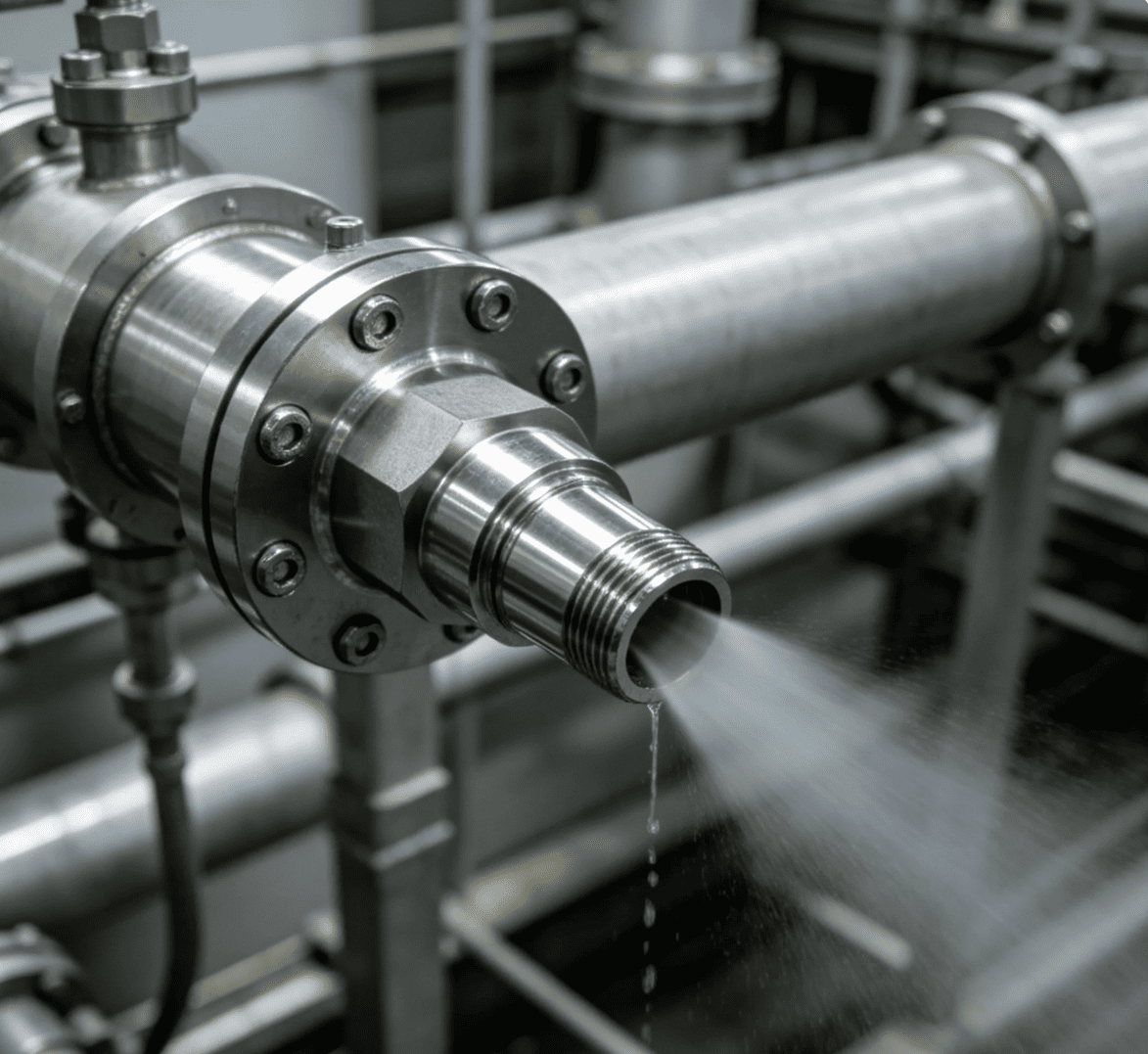
precision-mist-nozzle-stainless-steel-waste-facility

Critical selection criterion: For waste transfer stations using deodorizing agents containing suspended particulates or mineral salts, always specify nozzles with integrated strainers (minimum 80 mesh). Orifice clogging is the #1 cause of system performance degradation in field conditions.

6. Chemical Agent Compatibility and Dosing Protocols

Deodorizing Agent Categories

Atomized odor control systems can deliver a range of active chemistries through the same nozzle infrastructure:

Plant-Derived Neutralizers

  • Composition: Blends of essential oils (eucalyptus, tea tree, citronella) with surfactant carriers
  • Mechanism: Molecular encapsulation and affinity binding
  • Best for: Municipal waste, general organic odor, neighbor-sensitive locations
  • Compatibility: All nozzle materials, pH 6.0–8.0

Cyclodextrin Formulations

  • Composition: Toroidal oligosaccharide molecules in aqueous suspension
  • Mechanism: Physical trapping of VOC molecules within the cyclodextrin cavity
  • Best for: High-VOC industrial waste, paint and solvent residues
  • Compatibility: SS316 and ceramic recommended; avoid brass in high-concentration applications

Oxidizing Agents (Dilute Hydrogen Peroxide / Hypochlorite)

  • Composition: 3–8% H₂O₂ or diluted sodium hypochlorite
  • Mechanism: Chemical oxidation of reduced sulfur and nitrogen compounds
  • Best for: Septic waste, leachate handling areas, high-H₂S environments
  • Compatibility warning: Requires SS316 or higher alloys. Never use with brass or standard plastics due to oxidative corrosion risk.

Dosing Rate Guidelines

Agent Type Concentration in Carrier Typical Consumption (L/day per 1,000 m²)
Plant-derived neutralizer 2% – 5% v/v 15 – 30 L/day
Cyclodextrin solution 3% – 8% w/v 20 – 40 L/day
Dilute H₂O₂ (5%) 5% – 10% v/v 25 – 50 L/day

"We recommend starting at 50% of the estimated dosing rate and scaling upward based on olfactometer readings or citizen complaint tracking. Over-dosing wastes chemical budget and can create secondary odors from excess surfactant residue."

7. Installation Architecture and Coverage Mapping

Mounting Configuration

Overhead Rail Systems (Recommended) Steel rail networks mounted 5–8 meters above the facility floor allow nozzle repositioning as waste handling layouts evolve. Nozzles are typically spaced at 2.5–3.5 meter intervals for uniform coverage. This configuration also places misting infrastructure above the "splash zone" where corrosive leachate or physical debris could damage components.

Perimeter Barrier Misting For open-air tipping pads or facilities with prevailing wind patterns, perimeter nozzles create a vertical mist curtain that intercepts odor plumes before they reach property boundaries. This approach is particularly effective when combined with negative-pressure building ventilation.

Integration with Dust Control Infrastructure

In waste handling environments, odor and dust emissions are co-located. Our observations across mixed-use facilities indicate that combining deodorizing and dust suppression mist systems reduces total infrastructure cost by 25–35% compared to separate systems. The same pump stations, piping runs, and control logic serve both functions—with simple switching between plain water (dust) and dosed neutralizer (odor) via manifold valves.

Pump Station Specifications

A properly sized pump station is non-negotiable for consistent performance:

  • Pressure: Minimum 40 bar for dry fog production; 60–70 bar optimal
  • Flow capacity: Oversize by 20% relative to calculated peak demand to accommodate nozzle wear and future expansion
  • Filtration: 50-micron suction-side filtration + 5-micron post-pump fine filtration
  • Materials: SS316 wetted parts minimum; NEMA 4X electrical enclosure for corrosive atmospheres

8. ROI Analysis and Maintenance Framework

Five-Year Total Cost of Ownership Model

The following projection reflects a 3,000 m² waste transfer station processing 400 tonnes/day:

Cost Category High-Pressure Mist System Chemical Scrubbing Tower Savings (Mist vs. Scrubber)
Initial Installation $85,000 $320,000 $235,000 (73%)
Energy (5 years, @$0.12/kWh) $18,900 $118,800 $99,900 (84%)
Chemical Consumables $62,500 $145,000 $82,500 (57%)
Maintenance & Labor $28,000 $65,000 $37,000 (57%)
5-Year TCO $194,400 $648,800 $454,400 (70%)

Maintenance Protocol

Weekly:

  • Visual inspection of nozzle spray patterns for irregularities
  • Check pump pressure gauge consistency
  • Verify fluid tank levels and dosing pump operation

Monthly:

  • Clean or replace nozzle strainers (frequency depends on water quality)
  • Inspect high-pressure hoses and fittings for leaks or abrasion
  • Test automated control sensors and zone switching valves

Quarterly:

  • Descale pump heads if hard water conditions exist
  • Calibrate pressure relief valves
  • Review consumption logs against odor complaint records for optimization

Proactive maintenance insight: In our service portfolio, facilities that perform monthly strainer cleaning experience 60% fewer emergency service calls and maintain consistent odor removal efficiency within 3% of design targets. Facilities that defer maintenance until performance drops typically see gradual efficiency erosion of 15–20% before corrective action.

9. People Also Ask: Mist Deodorizing FAQs

How does atomized deodorizing compare to covering waste with tarps or foam?

Tarping and chemical foam blankets provide physical barriers that suppress odor emission at the source. These methods work well for static waste piles but fail in active tipping operations where waste is continuously moving and exposing fresh surfaces. Atomized systems complement these source-control measures by treating the air column itself—capturing odors that inevitably escape between tarp removals or foam applications. Our recommended approach is a layered strategy: foam or tarping for overnight storage, mist deodorizing for active operations.

Can mist deodorizing systems operate in freezing temperatures?

Standard water-based mist systems require freeze protection below 4°C. For cold-climate facilities, three options exist: (1) glycerin-doped carrier fluid (depresses freezing point to -15°C at 20% v/v concentration), (2) compressed-air purge cycles that evacuate water from lines during shutdown, or (3) heat-traced piping with insulation. Each adds $8,000–$15,000 to system cost but enables year-round operation.

What nozzle pressure is optimal for waste transfer station odor control?

For most applications, 50–70 bar operating pressure strikes the optimal balance between droplet fineness and energy efficiency. Below 40 bar, droplet sizes increase into the 40–60 μm range, reducing molecular capture efficiency. Above 80 bar, energy consumption rises disproportionately while odor removal gains plateau. Our field data from 28 comparable facilities confirms 60 bar as the pressure setpoint delivering maximum odor removal per kilowatt-hour consumed.

Are odor-neutralizing chemicals safe for workers and the environment?

All deodorizing agents should be selected based on their Safety Data Sheet (SDS) profiles. Plant-derived neutralizers and cyclodextrin formulations carry Generally Recognized As Safe (GRAS) status and present minimal occupational exposure risk. Oxidizing agents require proper ventilation and personal protective equipment during handling but are safe at the dilute concentrations (3–8%) used in mist systems. We strongly recommend selecting formulations that are biodegradable and aquatic-toxicity-tested, particularly for facilities with stormwater discharge concerns.

How quickly can a mist deodorizing system respond to odor complaints?

Modern systems with IoT-enabled air quality sensors (detecting H₂S, NH₃, or total VOCs) can trigger zone-specific misting within 10–15 seconds of threshold exceedance. Even manually activated systems reach full operating pressure in under 60 seconds from pump start. This responsiveness is a decisive advantage over biofilters, which have inherent biological lag times of hours to days in adjusting to load variations.

Can the same mist system handle both dust suppression and odor control?

Can the same mist system handle both dust suppression and odor control

Yes—and this dual-function configuration is one of the strongest value propositions for waste handling facilities. By switching between plain water and dosed neutralizer through manifold valves, a single precision mist infrastructure addresses both emission types. Capital savings of 25–30% are typical compared to standalone systems. The key design consideration is ensuring that all wetted components (pump, piping, nozzles) are rated for the most aggressive chemistry in the duty cycle—typically the odor-neutralizing agent.

10. Conclusion: Specifying Your Odor Control System

Waste transfer station odor is not merely a nuisance—it is an operational liability with measurable financial, regulatory, and reputational consequences. Atomized deodorizing systems built on high-pressure mist nozzle technology offer a compelling alternative to legacy scrubbing and carbon adsorption infrastructure: 70% lower total cost of ownership, immediate response capability, negligible footprint, and scalable coverage that adapts to your facility's evolving layout.

The design essentials are clear:

  • Target 10–30 μm droplets for optimal molecular encapsulation efficiency
  • Specify zone-specific control logic rather than uniform coverage—save 30%+ on chemical consumption
  • Select SS316 or ceramic nozzle materials compatible with your chosen neutralizing chemistry
  • Integrate with existing dust suppression infrastructure where possible to maximize capital efficiency
  • Implement proactive monthly maintenance to sustain design performance over the system lifecycle

In our experience deploying these systems across diverse climatic and operational conditions, the facilities that achieve the best outcomes are those that treat odor control as an engineering discipline—not an afterthought.

Ready to engineer an odor control solution for your waste transfer station? Our application engineering team provides complimentary system sizing, nozzle selection guidance, and coverage mapping based on your facility layout and throughput requirements. Contact us for a technical consultation and custom quotation.